The Myth of Sisyphus by Albert Camus: The Complete, Easy-to-Understand Summary
Written in Nazi-occupied Paris in 1942, Albert Camus' essay opens with the most serious question philosophy can ask: if the universe offers no built-in meaning, is life still worth living? His answer isn't comforting and it isn't despairing, it's an argument for staying wide awake inside the tension, without illusions and without giving up. Here's every core idea, explained in plain English, with a practice plan you can start today.
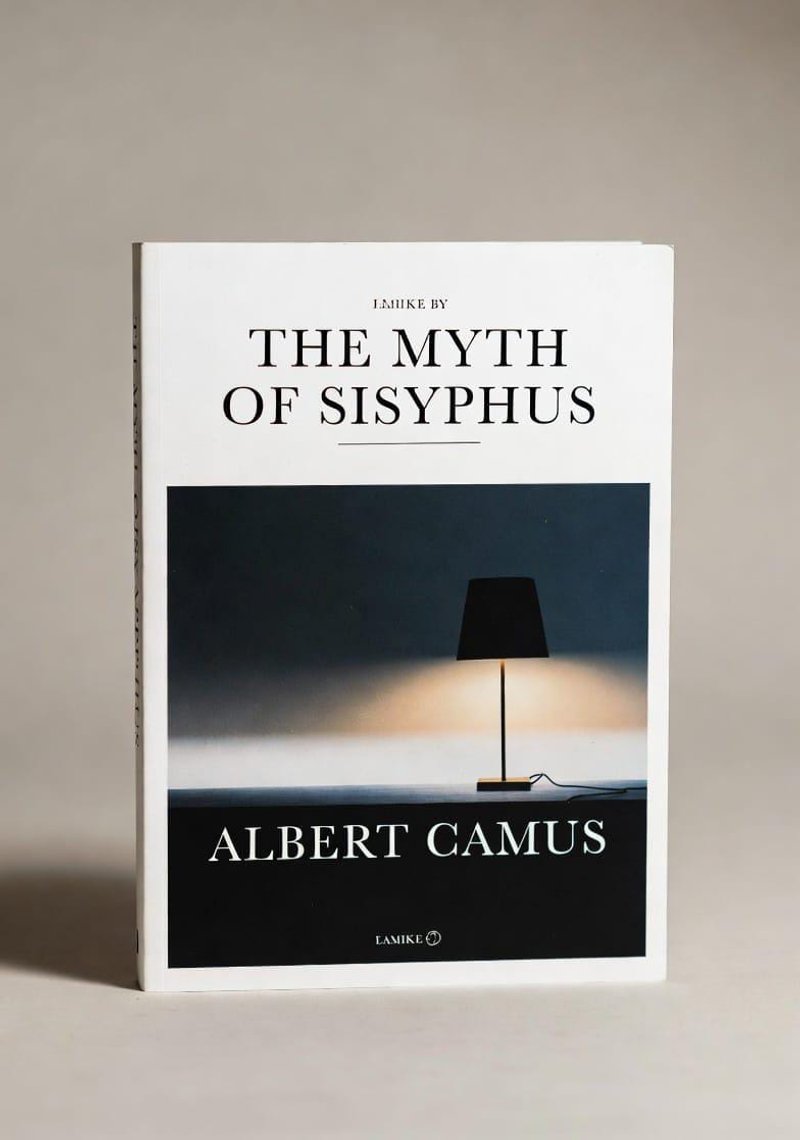
Our take in one line: this isn't really a book about suicide, it's a fierce, surprisingly life-affirming argument for staying alive and alert inside a universe that owes you no explanation.
Try this before you read another word. Picture the exact shape of an ordinary Wednesday: alarm, commute, work, commute, dinner, sleep, repeat. Now imagine pausing in the middle of that loop and asking, completely sincerely, why. Albert Camus argues that this question, asked honestly, is the single most serious one philosophy has to offer, more serious than any abstract debate about the nature of being, because how a person answers it quietly decides whether they keep living the way they've been living, or not living at all.
- Core concept: Published in French in October 1942 under Nazi occupation and in English translation in 1955, the essay asks whether the absence of inherent meaning in life makes suicide the only honest response, and argues it does not.
- The framework: Four ideas run through it — the absurd itself, philosophical suicide as evasion, the three consequences of lucid revolt, and the absurd hero as a living example of the stance Camus recommends.
- The mechanism: The absurd isn't a fact about the world alone or the mind alone, it's the tension born when a mind that demands meaning meets a universe that answers only with silence.
- The misconception: Many assume this is a grim, nihilistic book about ending one's life. Camus explicitly rejects that reading; the essay's entire argument is built to reject suicide, both physical and philosophical, as an evasion.
- The reframe: Meaning was never going to be handed down from outside. What's left, once you stop waiting for it, is the freedom and intensity of a life lived with full, unflinching awareness.
What The Essay Actually Argues
Albert Camus wrote Le Mythe de Sisyphe during the German occupation of France, and Éditions Gallimard published it in Paris in October 1942, the same year as his novel The Stranger. The English translation, titled The Myth of Sisyphus and Other Essays, followed in 1955 from translator Justin O'Brien. The book opens with one of the most quoted sentences in twentieth-century philosophy: "There is but one truly serious philosophical problem, and that is suicide."
From there, Camus spends roughly a hundred pages building toward a single question: if the universe offers no divine plan, no guaranteed reward for effort, and no built-in meaning, is ending one's life the only intellectually honest conclusion? His answer is no, but he refuses every easy route to that no. He won't accept the comfort of religion or of philosophical systems that promise meaning is secretly there if you look past appearances, a move he calls philosophical suicide, and he won't accept physical suicide as an honest way out either. Instead, the essay argues for staying inside the tension, wide awake, refusing both forms of escape.
The Four Pillars of the Essay
Beneath the essay's tight, urgent argument, four recurring ideas carry the philosophical weight.
- The Absurd. Not a property of the world alone, nor of the human mind alone, but the tension that arises when a mind that craves meaning and clarity meets a universe that offers neither.
- Philosophical Suicide. Camus' term for what happens when thinkers who correctly diagnose the absurd, he names Kierkegaard, Chestov, and Husserl among others, then "leap" past it into faith, mysticism, or abstract essence, quietly smuggling meaning back in.
- Revolt, Freedom, and Passion. The three consequences Camus draws from refusing both suicides: holding the tension open, acting without appeal to a validating future, and favoring intensity of lived experience over any single "best" way to live.
- The Absurd Hero. Figures who live this stance without flinching, Don Juan the seducer, the actor, the conqueror, and finally Sisyphus, whom Camus proposes as the purest image of a person who fully inhabits the absurd.
The Absurd: A Confrontation, Not a Property
Camus is precise about where the absurd actually lives. It isn't a fact about the universe on its own, the universe is simply indifferent, not absurd. It isn't a fact about the human mind on its own either, the mind's hunger for meaning is, by itself, just a hunger. The absurd is born in the meeting of the two: a reasoning creature demanding an answer, set against a universe that returns only silence. Camus compares the relationship to an impossible marriage, the absurd sits in neither party but in the doomed union between them.
He describes how this confrontation tends to surface quietly, without warning, in the middle of an ordinary day rather than during some dramatic crisis. A familiar street or a stranger's face can briefly look foreign and unexplainable, stripped of the meaning habit usually paints over it. Once seen this way, the feeling doesn't need an argument to justify it, it simply announces itself, the way a mood does.
Two Escapes From the Absurd (and Why Camus Rejects Both)
Camus argues that most thinkers who confront the absurd honestly end up flinching from it in one of two directions. Physical suicide resolves the tension by removing the person who feels it, ending the question by ending the questioner. Philosophical suicide, his sharper target, resolves the tension while keeping the person alive, by smuggling meaning back into the universe through a leap toward God, an eternal soul, or an abstract Idea that supposedly redeems present suffering.
He walks through Kierkegaard's leap of faith and several other absurdist philosophers, arguing that each, having stared honestly at the absurd, ultimately blinks and reaches for hope. Camus rejects both moves as evasions rather than solutions, one ends the confrontation by ending life, the other ends it by dishonestly resolving a tension the same thinker just spent pages proving was irresolvable.
What Wakes People Up to the Absurd
Camus describes the absurd as something that typically surfaces not during a crisis but in the middle of an utterly ordinary day, when the automatic sequence of commute, work, commute, dinner, sleep, repeated on a loop for years, suddenly becomes visible as a loop, and a person quietly asks why, seemingly for the first time. Other triggers he names include a sudden confrontation with the passage of time, noticing that one is aging, that tomorrow is not promised, and moments when the world's ordinary objects briefly look strange and unexplainable.
Two forces, in Camus' account, tend to pull people back out of this clear-eyed state before they can draw any conclusions from it.
- Hope (the internal pull): quietly reintroducing a future payoff, an afterlife, an eventual justice, a "someday it will make sense," that lets a person stop looking at the present moment honestly.
- Habit (the external pull): simply reasserting the unreflective rhythm of daily life until the question of why gets buried again beneath the next commute.
Revolt, Freedom, and Passion
Having refused both suicides, Camus draws out what he treats as the only honest stance left, three linked consequences of staying lucid inside the absurd.
The Practical Reframe
Revolt means refusing to let either hope or despair collapse the tension, holding the awareness of meaninglessness alive rather than resolving it. Freedom means acting without appeal to some future judgment or reward that might validate today's choices, since none is coming. Passion means favoring the greatest quantity and intensity of consciously lived experience over any single "correct" way to live, since no cosmic scorekeeper is ranking outcomes.
Camus' absurd heroes each embody one piece of this stance: Don Juan lives passion without permanence, the actor lives freedom from a single fixed identity, and the conqueror lives revolt within a history he knows won't remember him. Sisyphus, condemned by the gods to push his boulder up the mountain forever, lives all three at once. Camus closes the essay by suggesting that Sisyphus, fully conscious of his fate and refusing to hope for an end to it, can be pictured as content, even fulfilled, in that endless repetition, since the struggle itself, chosen and faced without illusion, is enough to fill a life.
Core Practices the Essay Teaches
1. Practice Absurd Awareness
Camus treats the moment the daily "mechanism" becomes visible, rather than invisible background noise, as valuable rather than distressing, provided you look directly at it instead of rushing to explain it away.
2. Refuse the Leap
When a painful or unresolved situation tempts you toward a comforting explanation, everything happens for a reason, it will all make sense eventually, Camus' method involves noticing the pull and sitting with the unresolved tension instead.
- The leap: reaching for a story that quietly resolves the discomfort of not knowing.
- Revolt: staying with the not-knowing, without needing it resolved to keep going.
3. Live for Intensity, Not Outcome
Because no future justifies the present, Camus' method involves choosing, at least sometimes, the option that maximizes how fully and consciously a moment is lived, rather than the option that best serves some longer-term plan.
Three Responses to the Absurd, at a Glance
| Dimension | Physical Suicide | Philosophical Suicide (The Leap) | Absurd Revolt (Camus' Answer) |
|---|---|---|---|
| What it does | Ends the confrontation by ending the person who feels it. | Ends the confrontation by smuggling meaning back into the universe. | Holds the confrontation open indefinitely, without resolving it. |
| Is life still lived? | No. | Yes, but on borrowed, unexamined terms. | Yes, fully and consciously. |
| Camus' verdict | An evasion, not a solution. | An evasion, not a solution. | The only intellectually honest response. |
| Camus' synthesis | Both forms of suicide end the search for meaning one way or another; revolt is simply what's left once a person refuses to end it. | ||
The Story Behind the Essay
Camus was born in 1913 in Mondovi, French Algeria, to a poor pied-noir family; his father died in the First World War when Camus was an infant, and he was raised by his mother, who was illiterate and partially deaf, in Algiers. He studied philosophy at the University of Algiers before working as a journalist. During the German occupation of France, Camus joined the Resistance and wrote for the underground and later above-ground newspaper Combat.
The Myth of Sisyphus and the novel The Stranger, published the same year, form what Camus called his "cycle of the absurd," later extended by the play Caligula. Although he was frequently grouped with existentialism because of his public association with Jean-Paul Sartre, Camus explicitly rejected the label in a 1945 interview, framing his philosophy of the absurd as distinct from, and partly a rebuttal of, the existentialist thinkers he critiques in the book. His friendship with Sartre famously fractured in the early 1950s over political disagreements, particularly about Communism, following Camus' later book The Rebel, which picks up directly where The Myth of Sisyphus leaves off. In 1957, Camus was awarded the Nobel Prize in Literature, becoming one of its youngest recipients. He died in a car accident in January 1960 at age 46.
Where the Essay Strains
A useful summary tells you the limits too, not just the highlights. Three fair criticisms worth knowing before you dive in:
- The central claims resist rigorous testing. Like much continental philosophy of its era, the absurd is asserted as something directly felt rather than proven from first principles, which makes the essay persuasive as literature but hard to evaluate by the standards of formal philosophical argument.
- Its target can feel like a caricature. Camus groups Kierkegaard, Chestov, and Husserl together as making essentially the same "leap," but scholars of those individual thinkers have argued Camus flattens real differences between their positions to make his own argument cleaner.
- The famous ending is more assertion than proof. The closing suggestion that Sisyphus can be imagined as content is widely read as a lyrical, almost willed leap of its own, less a conclusion Camus demonstrates than a stance he invites the reader to adopt.
Your 30-Day Practice Plan
- Week 1 — Notice the mechanism. Each day, catch one moment where routine becomes visible as routine, and sit with the "why" instead of rushing past it.
- Week 2 — Watch for the leap. Notice when you, or people around you, reach for a comforting explanation instead of accepting an unresolved answer, and simply observe it without judgment.
- Week 3 — Practice revolt. Pick one recurring frustration or hardship in your life and consciously choose to keep engaging with it, without hoping it resolves and without giving up on it.
- Week 4 — Practice passion. Choose one day to prioritize the intensity and presence of your experience over efficiency or long-term payoff, and notice the difference it makes.
Core Takeaways
The absurd is a relationship, not a fact
It lives in the meeting of mind and world, not fully in either one alone.
Two suicides, one evasion
Ending your life and leaping into false hope both dodge the same honest question.
Revolt gives life its weight
The ongoing refusal to resolve the tension is itself the source of meaning.
The struggle itself is enough
Full awareness of a fate, chosen and faced without illusion, can fill a life on its own.
Frequently Asked Questions
What is the main message of The Myth of Sisyphus?
That recognizing life has no built-in meaning does not make suicide the logical response. The honest alternative, in Camus' account, is to live fully and consciously within that tension, a stance he calls revolt.
What does Camus mean by "the absurd"?
The confrontation between a mind that demands meaning and clarity and a universe that offers only silence, arising in the relationship between the two rather than being a property of either one alone.
What is "philosophical suicide" in Camus' philosophy?
Camus' term for when a thinker who has honestly recognized the absurd escapes it anyway, not by dying, but by leaping toward religious faith, mysticism, or an abstract idea that quietly restores the meaning the argument had just dismantled.
Was Camus an existentialist?
He explicitly rejected the label, describing his philosophy of the absurd as distinct from, and partly a response to, the existentialist thinkers he critiques in the essay, even though he was frequently grouped with Jean-Paul Sartre in public discussion.
What does the essay's ending mean?
Camus closes by suggesting that Sisyphus, fully aware of his endless task and refusing to hope for an escape from it, can be pictured as content, even fulfilled, since the conscious struggle itself, not any outcome, is what gives the task its worth.
Final Verdict
Whether The Myth of Sisyphus lands for a given reader often depends on their willingness to sit with a question most of daily life is built to help them avoid. Camus never proves, in any airtight logical sense, that Sisyphus can be imagined as content, and by his own argument, he couldn't have, certainty of that kind was never on offer. What the essay leaves you with instead is a way of standing inside an unanswerable question without flinching from it, and a boulder that, looked at closely enough, starts to look less like a punishment and more like a life. More than eighty years after it was written in an occupied city under curfew, that stance is still the essay's most enduring argument.